

Breadcrumb
How wearing a CGM is shaping future pharmacists
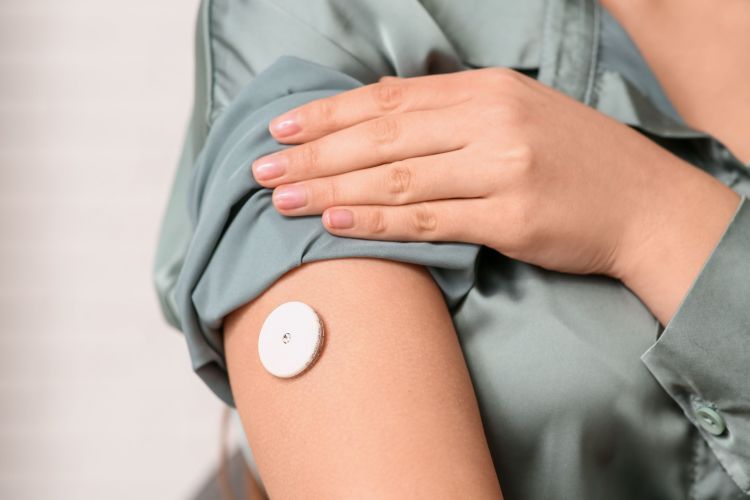
To better understand the daily realities of living with diabetes, 318 first- and second-year doctor of pharmacy students at the Thomas J. Long School of Pharmacy spent two weeks wearing continuous glucose monitors (CGMs) as part of an innovative learning experience developed by Deepti Vyas, PharmD, CHSE, professor of pharmacy practice, Vista Khosraviani, PharmD, APh, associate clinical professor of pharmacy practice and Ed Rogan, PharmD, BCACP, FCPhA, professor of pharmacy practice.
During the six-week design thinking-based module, students tracked their glucose levels, meals, activity and daily routines. Design thinking is a human-centered approach to problem-solving that begins with understanding the needs and experiences of the people a solution is designed to help.
Wearing the continuous glucose monitor formed the "empathize" stage, giving students firsthand insight into the daily demands of glucose monitoring before they moved into lessons on carbohydrate counting, insulin administration and hypoglycemia management. Drawing on those experiences, students designed prototypes for a patient-centered diabetes clinic, refining and testing their ideas through feedback from classmates.
Students quickly discovered how everyday choices affected their glucose levels.
For Gurwinder Kaur ’28, the experience offered a new perspective on the connection between food, activity and glucose levels.
“The most surprising insight I gained was being able to track my glucose levels and see how different foods and exercise affected them,” she said. “Food was the biggest factor I discovered.”
Students also experienced some of the challenges that come with wearing a medical device. Kaur recalled nighttime alarms triggered by sleeping on the sensor, providing a glimpse into the daily frustrations many patients face.
Adibah Dhaybi ’28 was surprised by how much a simple lifestyle change could affect glucose readings.
“One of the biggest surprises was the impact of a simple 30-minute walk after a meal,” she said. “Seeing that difference in real time reinforced how even moderate physical activity can improve glucose levels.”
The experience did more than build clinical knowledge. It helped students develop a deeper appreciation for the constant attention, decision-making and emotional burden associated with managing diabetes.
“Participating in this experience strengthened my commitment to providing patient-centered care,” Dhaybi said. “It reinforced the value of empathy, active listening and working collaboratively with patients to develop realistic and personalized treatment plans.”
The project reinforced an important lesson: Diabetes management is about more than interpreting data or counseling patients on medications. By experiencing a small part of what patients navigate every day, students gained the empathy and perspective needed to provide more compassionate, effective care.